Japandi Wall Art for Etsy: The Trending Aesthetic That Sells
Complete guide to japandi wall art design, pricing, and selling on Etsy. Combine Japanese minimalism + Scandinavian warmth for a trending niche.
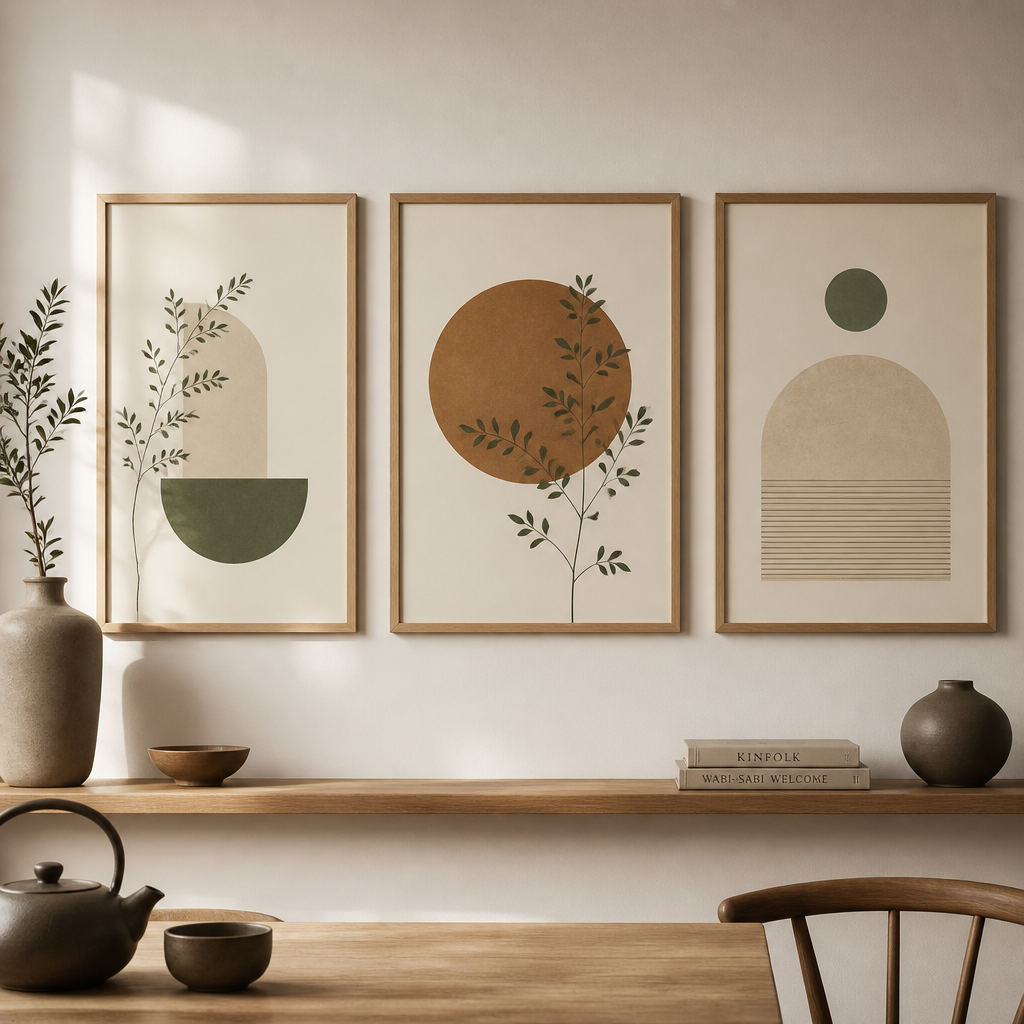
Japandi (Japanese + Scandinavian) is one of 2026’s fastest-growing interior design trends. It combines Japanese minimalism and natural materials with Scandinavian warmth and functionality. On Etsy, japandi wall art has explosive search growth and exceptional conversion rates.
Why Japandi Is Hot: The Data
- Search growth: “Japandi wall art” +188% YoY (Elistit Market Pulse)
- Search volume: 800–2,000 monthly searches on Etsy (emerging, less saturated)
- Buyer profile: Design-forward, affluent, sustainability-conscious, young professionals, interior designers
- Average price: $10–$18 per print (premium positioning; these buyers value intentionality)
- Conversion rate: 2.5–4% (high-intent audience)
- Seasonality: Year-round; peaks in home renovation seasons (spring + fall)
Why now? Japandi merges two beloved aesthetics. Millennial + Gen Z buyers love the combination of:
- Japanese: Simplicity, nature-connection, zen (appeal of minimalism)
- Scandinavian: Warmth, functionality, coziness (appeal of lived-in comfort)
Result: Sophisticated simplicity that feels both calm AND inviting.
Japandi Design Philosophy: East Meets North
Japandi is minimalist with warmth. It’s Japanese zen with Scandinavian coziness.
Core Principles
- Natural materials: Wood, stone, bamboo, linen (implied through color/texture)
- Muted palette: Earth tones, blacks, grays, soft white
- Handcrafted feel: Imperfect lines (wabi-sabi influence), not sterile
- Negative space: Plenty of breathing room; less is more
- Nature-inspired: Botanicals, organic shapes, natural elements
- Intentional composition: Every element serves purpose
Color Palette
Japandi colors are warm and earthy, but subdued.
| Color | Role | Hex/Example |
|---|---|---|
| Cream/Off-white | Base | #FFFAF0, warm white |
| Warm gray | Secondary | #D4CCC5, taupe |
| Charcoal/Black | Lines/contrast | #2C2C2C |
| Warm brown | Accent | #8B7355, warm tan |
| Muted green | Nature element | #7A9E8F, sage |
| Soft black | Optional depth | #1A1A1A (not pure black) |
Best combos:
- Cream + charcoal + warm brown (classic japandi)
- Cream + sage green + warm gray (modern japandi)
- Off-white + black + natural wood texture (minimalist japandi)
Key Visual Elements
| Element | Effect | Examples |
|---|---|---|
| Botanical | Nature connection | Bamboo, ferns, minimal florals |
| Geometric | Structure, zen | Circles, squares, hexagons (simple) |
| Texture | Handmade feel | Subtle brushstrokes, grain appearance |
| Negative space | Calm, breathing room | 40–50% of canvas empty |
| Hand-drawn lines | Organic perfection | Slightly imperfect (wabi-sabi) |
Japandi Wall Art Niches
Niche 1: Japandi Botanical
- Search: “Japandi botanical print”, “Japanese plant art”, “japandi nature wall art”
- Design: Minimal botanical (bamboo, fern, moss) with geometric frame
- Buyer: Plant parents, eco-conscious, nature-lovers, Scandinavian home
- Price: $10–$15
Niche 2: Japandi Geometric
- Search: “Japandi geometric print”, “minimalist japandi art”, “japanese circle art”
- Design: Simple geometric shapes (circles, squares, lines) in muted palette
- Buyer: Modern office, design-forward, contemporary home
- Price: $11–$16 (geometry feels premium)
Niche 3: Japandi Zen (Meditation/Mindfulness)
- Search: “Japandi zen prints”, “meditation wall art”, “mindfulness japandi”
- Design: Zen elements (water ripples, meditation pose, balance) with japandi colors
- Buyer: Yoga studios, meditation rooms, wellness-focused, therapists’ offices
- Price: $10–$15 (wellness niche allows premium)
Niche 4: Japandi Landscape
- Search: “Japandi landscape print”, “japanese mountain art”, “minimalist landscape wall art”
- Design: Mountain, water, horizon line (minimal, layered)
- Buyer: Nature lovers, home office, modern Asian-inspired design
- Price: $11–$17
Niche 5: Japandi Typography (Quotes + Kanji)
- Search: “Japandi quote print”, “japanese kanji wall art”, “zen quote print”
- Design: Minimal text (English quote or kanji) over japandi graphic element
- Buyer: Gift-givers, personal inspiration, Asian culture enthusiasts
- Price: $9–$14
Japandi Design Process: Step-by-Step
Step 1: Choose Your Subject
Japandi works best with:
- Natural elements (bamboo, mountains, water, minimal florals)
- Geometric simplicity (circles, horizontal lines, zen circles)
- Negative space (lots of empty room)
Avoid:
- Busy compositions
- Bright colors
- Overly realistic details
- Western design elements
Step 2: Sketch Composition
Japandi thrives on asymmetrical balance. Not perfectly centered, but feels balanced.
Layout idea:
Large geometric shape (circle/square) off-center
+
Minimal botanical (leaf/bamboo) emerging from shape
+
Subtle horizontal line (water ripple)
+
50% whitespace
Step 3: Choose Your Style
- Ink wash effect: Soft, translucent (Japanese influence)
- Line art: Clean, minimal lines (Scandinavian influence)
- Hybrid: Mix both: geometric lines + soft botanical wash
Step 4: Finalize Palette
- Background: Cream or off-white (#FFFAF0)
- Primary element: Charcoal or warm brown
- Accent (optional): Sage green or soft gray
- Keep it to 2–3 colors max
Step 5: Add Imperfection (Wabi-Sabi)
Japanese aesthetics value imperfection. In digital design, this means:
- Slightly organic lines (not perfectly straight)
- Subtle texture (subtle grain, slightly irregular brushstroke)
- Asymmetrical placement (intentionally off-center)
This makes it feel handcrafted, not sterile.
Step 6: Whitespace Refinement
- Margins: 15–20% on all sides
- Interior whitespace: 40–50% of design area should be empty
- Subject size: 40–50% of canvas
Batch Creation: 1 Design → Multiple Variations
Japandi variations are fast because the palette is limited:
Variation 1: Charcoal + cream (classic) Variation 2: Warm brown + cream (warmer japandi) Variation 3: Sage green + cream (nature focus) Variation 4: Black + off-white (high contrast, luxury) Variation 5: Different botanical (swap bamboo for ferns) Variation 6: Different geometric shape (swap circle for square)
Manual time: 2–3 hours
With Elistit: 12 minutes (color + shape variations)
Pricing Strategy for Japandi
Japandi buyers are affluent, design-conscious, and willing to pay premium. They’re not price-hunting.
Single Print Pricing
- $10–$12: Entry-level (budget buyers)
- $12–$16: Sweet spot (best conversion; premium design value)
- $16–$20: Luxury (largest/limited edition/special detail)
Bundle Pricing
- 2-pack (diptych): $20–$26 (pair of designs, hung together)
- 3-pack (set): $25–$35 (curated collection)
- 5-pack (room): $35–$50 (whole wall solution)
Best sellers: 3-packs. Japandi buyers love curated collections that work together.
Positioning
Don’t compete on price. Compete on design authenticity:
- ✓ Hand-drawn quality (imperfect, intentional)
- ✓ Curated collections (not random designs)
- ✓ Niche clarity (“authentic japandi”, not just “art”)
Japandi Listing Strategy
Title Keywords
- Primary: “Japandi Wall Art” or “Japandi Print”
- Secondary (pick one):
- “Japandi Botanical Print”
- “Japandi Zen Art”
- “Japanese Scandinavian Print”
- “Minimalist Japandi Decor”
- “Japandi Geometric Print”
Tags (10–13)
- japandi wall art
- japandi print
- japandi aesthetic
- japanese scandinavian
- minimalist japanese art
- zen wall art
- botanical print
- modern minimalist
- home decor print
- wall art bedroom
- digital download
- printable art
- instant download
Description Hook
“Japandi perfection. This [subject] print blends Japanese zen minimalism with Scandinavian warmth. Muted tones, intentional simplicity, and a calm that reads clearly in any room.”
Mockup Photos (Essential for Japandi)
Japandi works best in calm, curated settings. Show it in peaceful, intentional spaces.
- Photo 1: Printed + framed on neutral wall (bedroom or office)
- Photo 2: Gallery wall (2–3 japandi prints, clean spacing, wood frames)
- Photo 3: Lifestyle (on desk with plants, book, natural materials)
- Photo 4: Close-up (showing line quality, texture detail)
- Photo 5: Room context (showing the calm, zen atmosphere in the full room)
Pro tip: Japandi mockups should feel INTENTIONAL and PEACEFUL. Avoid clutter. Show warm wood, natural elements, minimal furniture.
Common Japandi Mistakes to Avoid
❌ Too busy composition: Japandi needs breathing room; if it feels cluttered, simplify
❌ Wrong colors: Bright or neon; stick to muted earth tones
❌ Sterile perfection: Digital perfection kills japandi (embrace imperfection)
❌ Mixing aesthetics: Avoid mixing Western design elements; keep it pure East-meets-North
❌ Overly realistic: Japandi is stylized; go for ink-wash or line-art, not photorealism
❌ Priced too low: Japandi buyers expect premium; price at $12+ minimum
❌ No variations: Create 3–5 color variations; japandi buyers collect sets
Seasonal Japandi Opportunities
Japandi is strong year-round, but themes shift:
| Season | Trend | Design Angle |
|---|---|---|
| Spring | Renewal, fresh start, gardens | Florals, growth, new leaves |
| Summer | Nature, waterside, zen | Water elements, minimal landscapes |
| Fall | Harvest, cozy minimal, warm tones | Warm browns, harvest feel |
| Winter | Hygge japandi, warmth | Warm neutrals, evergreen branches |
Best revenue: Fall (redecorating + home refresh before winter) and spring (renewal energy).
Japandi for Interior Designers
Japandi appeals heavily to interior design professionals and affluent home buyers. Consider:
- Description: Mention “designer-approved” or “professional design” (niche audience wants credibility)
- Pricing: These buyers value premium; price confidently
- Licensing: Offer commercial license option (interior designers may need it; charge $20+ premium)
- Bulk discounts: Offer 10+ print discounts for design firms
Why Japandi Beats Other Niches (For You)
- Emerging: Less saturated than boho or minimalist, so easier to rank
- Premium positioning: Buyers don’t price-hunt; higher margins
- Fast-growing: +188% search growth means momentum
- Batch-friendly: Simple palette = easy variations
- High conversion: 2.5–4% (driven by design-conscious audience)
Next: Build Your Japandi Collection
- Choose japandi sub-niche (botanical? geometric? zen?)
- Design 1 bestseller (follow design process above)
- Publish + monitor (check for 10+ views + 2+ favorites within 48 hours)
- Create 3 color variations (same design, different palettes)
- Create 2 new designs (different subject, same style)
- Bundle into sets (3-pack or 2-pack diptych)
- Batch-generate variations (use Elistit for color/style swaps weekly)
Resources
- Wall Art Ratios Guide: Get dimensions right
- Design Checklist: 32-point quality audit
- Listing Launch Checklist: First 72 hours
- Pre-Listing SEO Checklist: Keywords + tags
- Minimalist Wall Art Guide: the calm/neutral sibling aesthetic with strong Etsy search volume
- Coastal Grandmother Wall Art Guide: shares the restrained, muted-palette sensibility from a Western coastal angle
Ready to create? Try Elistit and batch-generate japandi variations in minutes.
Quick questions
Quickly answered.
Q.01What is Japandi wall art and why is it trending on Etsy?
Japandi combines Japanese minimalism (wabi-sabi, natural materials, negative space) with Scandinavian warmth and functionality. It is trending because it appeals to design-conscious buyers who want calm, intentional interiors, as a response to maximalist overload.
Q.02What colors define the Japandi aesthetic for printable art?
Warm neutrals dominate: warm white, natural linen, warm gray, muted sage, and charcoal. Accent tones are earthy (terracotta, soft ochre, dusty green). Avoid cool grays, bright whites, and saturated colors.
Q.03What subjects sell best in the Japandi wall art niche on Etsy?
Botanical line art (single branches, bamboo, dried grasses), abstract organic shapes, Japanese calligraphy, wabi-sabi ceramics, and landscape horizons. Subjects with strong negative space outperform busy compositions.
Q.04Who buys Japandi wall art on Etsy?
Interior design professionals, affluent home buyers in the 30 to 55 age range, and design-forward renters. This buyer skews higher income and is willing to pay $10 to $20 per print for perceived quality.
Q.05What print sizes work best for Japandi wall art?
Horizontal and square formats perform well in Japandi, because they emphasize breathing room and whitespace. Tall portrait prints work for single-subject botanicals. Offer 4:5, square, and 3:2 landscape as your core ratio set.
Keep going.
Boho Wall Art for Etsy: Designs That Sell in 2026
Complete guide to creating profitable boho wall art for Etsy. Design principles, trending aesthetics, pricing strategy, and how to batch-create variations.
Botanical Wall Art for Etsy: What Sells, What's Oversaturated, and How to Stand Out
Botanical is one of Etsy's most competitive niches. How to find the undersaturated sub-niches and create botanical prints that actually rank.
Celestial Wall Art for Etsy: Designs, Trends, and What Sells in 2026
Moon phases, star maps, zodiac prints: what celestial buyers want on Etsy and how to create high-converting celestial wall art listings.
Coastal Grandmother Wall Art for Etsy: The Aesthetic That Keeps Selling
Coastal grandmother is relaxed, timeless, and has buyers with disposable income. What the aesthetic wants and how to create prints that fit it.