Maximalist Wall Art for Etsy: Bold Designs That Sell in a Minimalist-Saturated Market
While everyone floods the minimalist niche, maximalist wall art has hungry buyers and far less competition. What sells and how to position it.
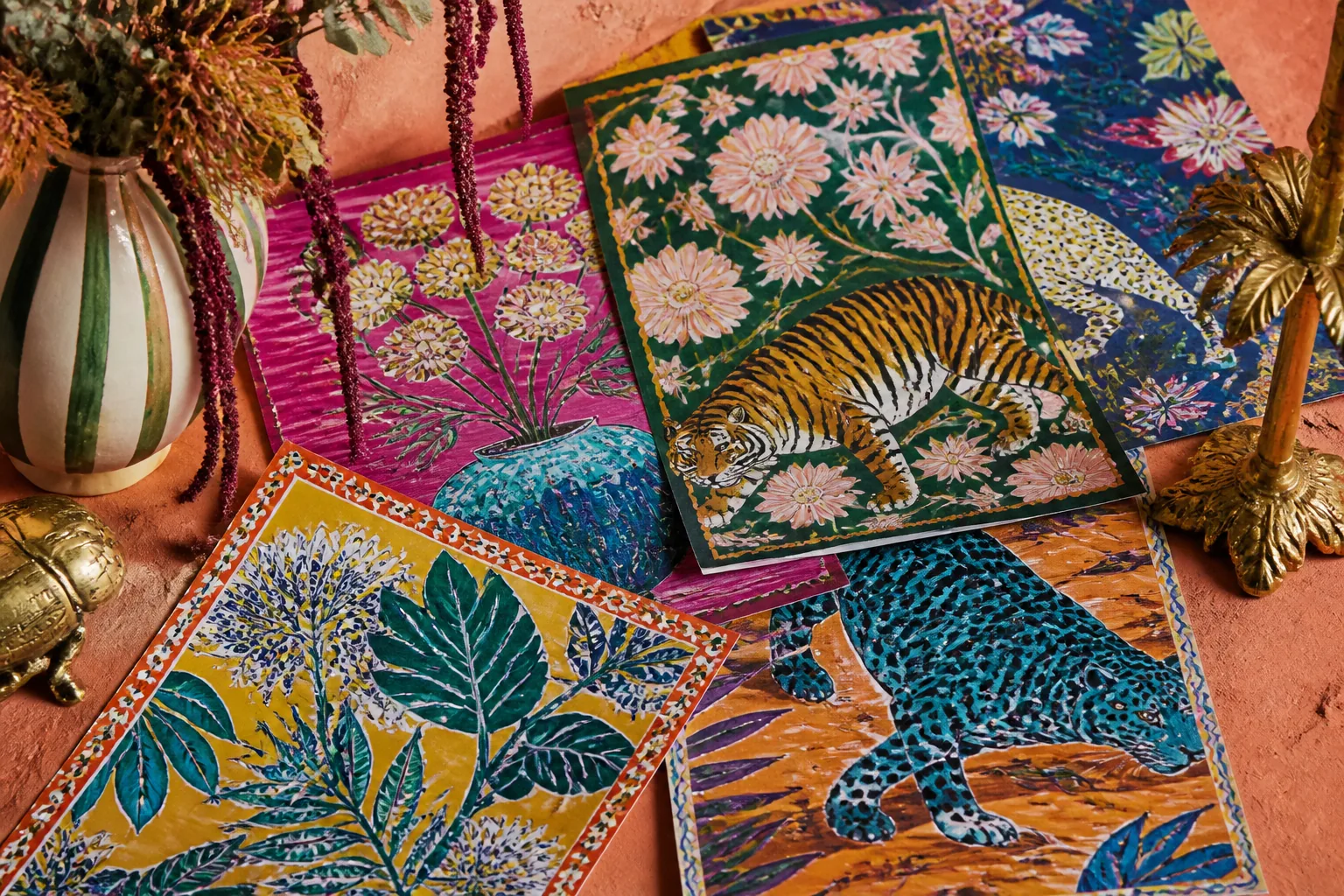
Everyone and their cousin sells minimalist wall art. Beige line-art faces, single-stem botanicals, “she believed she could” in thin sans-serif. The niche is so crowded that a new shop publishing a clean abstract print is the forty-thousandth result for the same search. Meanwhile the buyers who want loud, layered, personality-soaked art are scrolling past all of it looking for something that isn’t sad-beige, and there aren’t enough sellers serving them.
That gap is the opportunity. Maximalism is harder to design well, which is exactly why the competition stays thin. The buyers who want it are some of the most committed decorators on the platform.
The Contrarian Opportunity
Run the searches yourself. “Minimalist wall art” returns a wall of near-identical listings competing on price. “Maximalist wall art,” “eclectic gallery wall set,” “bold colorful prints,” and “dopamine decor wall art” return a fraction of the listings, and the top sellers there aren’t all established power shops. There’s room at the top.
The reason is supply, not demand. Minimalist is easy to produce: a beginner can make a passable line drawing in an afternoon, so thousands do. Maximalism demands color confidence and composition skill, so most sellers avoid it. When supply is constrained by skill and demand is real, a shop that can actually deliver the look gets disproportionate visibility.
And the demand is real. Maximalism isn’t a fringe taste. It’s a documented shift away from the gray-and-greige decade. The buyers driving it skew younger, decorate intentionally, and treat their walls as identity. They are not casual one-print shoppers.
What Actually Sells
Five things move in this niche:
- Bold color blocking and saturated abstracts: confident shapes in clashing-by-design palettes, the visual opposite of muted boho.
- Pattern-on-pattern compositions: florals over geometrics, checks behind organic shapes, layered prints that reward a second look.
- Gallery wall sets (6 to 9 pieces): the headline format, because maximalists build walls, not single statements.
- Eclectic botanical: not the delicate single-stem kind; think dense, jewel-toned, slightly surreal jungle and flora.
- Vintage-eclectic mixes: antique illustration energy collided with modern color: old botanical plates, vintage portraits, retro typography recoloured into something loud.
The common thread is abundance with structure. These prints feel collected, not bought, which is the entire point for this buyer.
The Dopamine Decor Trend
“Dopamine decor” is the umbrella term the buyers themselves use. It’s the design world’s answer to wellness-by-color: rooms designed to spark joy through saturation, pattern, and personality rather than calm through emptiness. It exploded on Pinterest and TikTok and it has staying power because it’s a reaction against a full decade of minimalism, not a passing micro-trend.
For a seller this matters because the buyers come pre-educated. They search the term, they know the aesthetic, and they’re frustrated by how much of Etsy is still beige. You’re not creating demand. You’re catching it.
Color Palette Strategy
Maximalist color is saturated and clashing-by-design, but it is not random. The shops that look professional build every design on a 3 to 5 color spine:
| Role | Examples |
|---|---|
| Loud anchor 1 | Magenta, cobalt, emerald, tangerine |
| Loud anchor 2 | A clashing partner (cobalt with tangerine, magenta with emerald) |
| Grounding dark | Oxblood, ink navy, charcoal-plum |
| Warm bridge | Mustard, terracotta, ochre |
| Optional accent | A single bright pop used sparingly |
The clash is the feature. Complementaries placed next to each other (not blended) read as bold and deliberate. The failure mode is overlapping complementaries until they turn brown. Keep colors separated by clean shape and line and the palette stays vivid.
Gallery Wall Set Pricing
Sell sets, because that’s what the buyer is assembling. A cohesive 6-piece set lets someone solve an entire wall in one purchase instead of hunting for pieces that go together.
- 6-piece set: $18 to $28
- 9-piece set: $26 to $38
- Single statement print: $8 to $14 (offer it, but lead with sets)
Sets lift average order value and they’re stickier in search because the listing title naturally carries “gallery wall set,” which is a high-intent phrase with far less competition than “wall art” alone.
What to Avoid
- Muddy color: the number one way to make maximalism look amateur. Keep saturated colors separated, never blend complementaries into sludge.
- Busy without intent: uniform density with no focal point reads as visual noise. Every print needs one dominant element and some quieter space.
- Same-scale pattern stacking: two patterns at the same scale fight and create static. Vary the scale so they layer.
- Apologetic color: half-committing to a muted version defeats the niche. If you’re going maximalist, commit. The buyer came for loud.
Sub-Niches Worth Owning
“Maximalist” is the umbrella, but the easiest wins live in the named sub-styles underneath it, each with its own devoted buyer and even thinner competition:
- Jewel-tone maximalist: emerald, sapphire, amethyst, ruby. Rich and slightly moody; sells into bedrooms and dining rooms.
- Vintage-eclectic: recoloured antique botanical plates, old portraits, retro type. The “collected over decades” look.
- Tropical maximalist: dense jungle florals, parrots, palms in saturated greens and hot pinks. Strong in spring and summer.
- Cluttercore / more-is-more: deliberately busy, layered, joyful chaos. The buyers use these exact terms.
- Eclectic botanical: the dense, jewel-toned, slightly surreal flora that bridges boho-fatigue and full maximalism.
You don’t have to pick one forever, but launching a shop around a single sub-niche makes your catalog cohere and your tags sharper. A buyer who lands on a tight “jewel-tone maximalist” shop is far likelier to buy a set than one who lands on a grab-bag of unrelated loud prints.
Etsy SEO for the Niche
Target the terms the buyers actually type, which are more specific (and less contested) than generic wall-art keywords. Build titles and tags around: maximalist wall art, eclectic gallery wall set, dopamine decor prints, bold colorful wall art, vibrant abstract print set, eclectic botanical prints, vintage eclectic wall art.
Lead your title with the format plus the aesthetic. “Maximalist Gallery Wall Set of 6, Eclectic Bold Colorful Prints” beats a bare “Wall Art Print.” Use the set count and the word “eclectic” or “maximalist” early, because those are the differentiators a minimalist-fatigued buyer is filtering for.
You can batch-produce a cohesive 6 or 9 piece set (consistent palette, varied motifs) in one workflow with the Wall Art Generator, which keeps the color spine locked across every piece in the set so the gallery wall actually coheres.
Building a Cohesive Set That Doesn’t Fall Apart
The hardest part of a maximalist set isn’t making one loud print. It’s making nine loud prints that belong together. A gallery wall fails when every piece is screaming a different palette; it works when the colors repeat and the motifs vary. The rule that holds it together: lock the color spine across the whole set, then change what fills the frame.
A reliable nine-piece recipe looks like this. Three “anchor” prints carry the heaviest pattern and the full palette. Three “supporting” prints use the same colors at lower density, with one dominant motif and more breathing room. Three “rest” prints are nearly quiet: a single bold shape, a solid field with one accent, a piece of recoloured vintage line art. Hung together, the anchors give the wall energy, the rest pieces give the eye somewhere to land, and the shared palette makes the whole thing read as one collected gallery rather than a clearance bin.
Mix orientation too. A set of all-portrait prints reads rigid; a maximalist wall wants a couple of landscape and square pieces in the mix so it feels gathered over time rather than bought as a kit. Offer the buyer the ratios to make that possible.
Mockups That Sell the Maximalist Look
Maximalism is sold on the room, not the file. A flat thumbnail of a single print can’t communicate “this will make my space feel alive.” A styled gallery wall can. Your strongest mockups show the full set hung together on a colored or wallpapered wall, because the buyer is imagining the wall, not the print.
Lean into context this buyer recognises: a colorful living room with a velvet sofa, a maximalist bedroom with patterned bedding, an eclectic hallway. Pure white-wall mockups undersell the aesthetic, making a loud set look stranded. Show at least one full-wall arrangement, one closer pairing of two or three pieces so the pattern detail reads, and one single hero print so the buyer can judge quality up close. The mockup set should feel as confident as the art.
Seasonal and Trend Angles
Maximalism sells year-round because it’s an identity, not a season, but a few angles spike. Spring brings a refresh wave as people redecorate, and bold botanical sets ride it. Back-to-college in late summer is strong, because dorm and first-apartment decorators are exactly the dopamine-decor demographic and they’re buying for blank rented walls. The new-year nesting period in January favors redecoration-focused framing.
Trend-wise, keep an eye on the named micro-aesthetics that fold into maximalism: “more is more,” “cluttercore,” jewel-tone revival, vintage-eclectic. You don’t have to chase each one, but naming the current term in a tag or title catches the buyer searching it this month while the broad “maximalist” tags keep working all year.
The Buyer, In One Line
Younger, design-literate, anti-beige decorators building gallery walls in rented and owned homes for joy rather than neutrality. They will reward the shop that finally gives them enough good options.
Where to Go Next
- Wall Art Ratio Guide: get every print in your set sized correctly for the common frame ratios.
- Etsy SEO for Wall Art: the full keyword and tag playbook for art listings.
- Minimalist Wall Art Design: the niche you’re deliberately differentiating from, worth understanding.
- Dark Academia Wall Art: the other rich, layered, anti-minimalist aesthetic worth ranging into.
- Vintage Map Wall Art: deep catalogs of detailed, characterful prints for the same maximalist buyer.
Quick questions
Quickly answered.
Q.01Does maximalist wall art actually sell on Etsy, or is minimalist still the safer bet?
Maximalist sells, and the competition-to-demand math is better than minimalist right now. Search 'minimalist wall art' and you fight tens of thousands of listings for a tired buyer. Search 'maximalist wall art' or 'eclectic gallery wall set' and you get a few thousand listings with buyers who can't find enough good options. Lower competition plus a buyer with a specific, underserved taste is exactly where a small shop wins.
Q.02What color palette works for maximalist prints without looking like a mess?
Saturated and clashing on purpose, but built on a 3 to 5 color spine so the chaos has a structure. Pick two loud anchors (think magenta and emerald, or cobalt and tangerine), one grounding dark (oxblood, ink), and one or two warm bridges (mustard, terracotta). The eye reads it as bold and intentional, not muddy. Muddy happens when you blend complementaries into brown. Keep colors separated by shape and line, not overlapped.
Q.03Should I sell single maximalist prints or sets?
Sets. Maximalist buyers are building gallery walls, so 6 to 9 piece sets are the format that matches what they're actually doing. A cohesive 6-piece set priced at $18 to $28 outsells the same designs sold individually, because you're solving the whole wall in one purchase instead of making them hunt for matching pieces.
Q.04What's the maximalist buyer profile?
Renters and homeowners decorating eclectic, colorful interiors (the dopamine-decor crowd). They're often younger, design-literate, active on Pinterest and TikTok, and proudly anti-beige. They decorate for joy and personality, not resale-neutral. They'll pay for prints that feel collected and unique rather than mass-produced.
Q.05How do I keep a busy design from reading as cluttered?
Busy-with-intent has a focal hierarchy and breathing room inside the frame; cluttered is uniform density with no rest. Give each print one dominant element, layer two or three supporting motifs, and leave at least 15 to 20 percent of the composition quieter so the eye has somewhere to land. Pattern-on-pattern works when the patterns differ in scale. A large floral over a fine geometric reads rich; two same-scale patterns read like static.
Keep going.
Botanical Wall Art for Etsy: What Sells, What's Oversaturated, and How to Stand Out
Botanical is one of Etsy's most competitive niches. How to find the undersaturated sub-niches and create botanical prints that actually rank.
Boho Wall Art for Etsy: Designs That Sell in 2026
Complete guide to creating profitable boho wall art for Etsy. Design principles, trending aesthetics, pricing strategy, and how to batch-create variations.
Celestial Wall Art for Etsy: Designs, Trends, and What Sells in 2026
Moon phases, star maps, zodiac prints: what celestial buyers want on Etsy and how to create high-converting celestial wall art listings.
Classroom Clipart for Etsy: The Niche, What Teachers Buy, and How to Create Bundles That Sell
Classroom clipart is one of Etsy's steadiest niches. What teachers search for, how to price and structure bundles, and what makes a set convert.