Dark Academia Wall Art for Etsy: Aesthetic, Designs, and What Buyers Actually Buy
The dark academia aesthetic has sustained demand on Etsy. What the niche wants, which designs convert, and how to price and position.
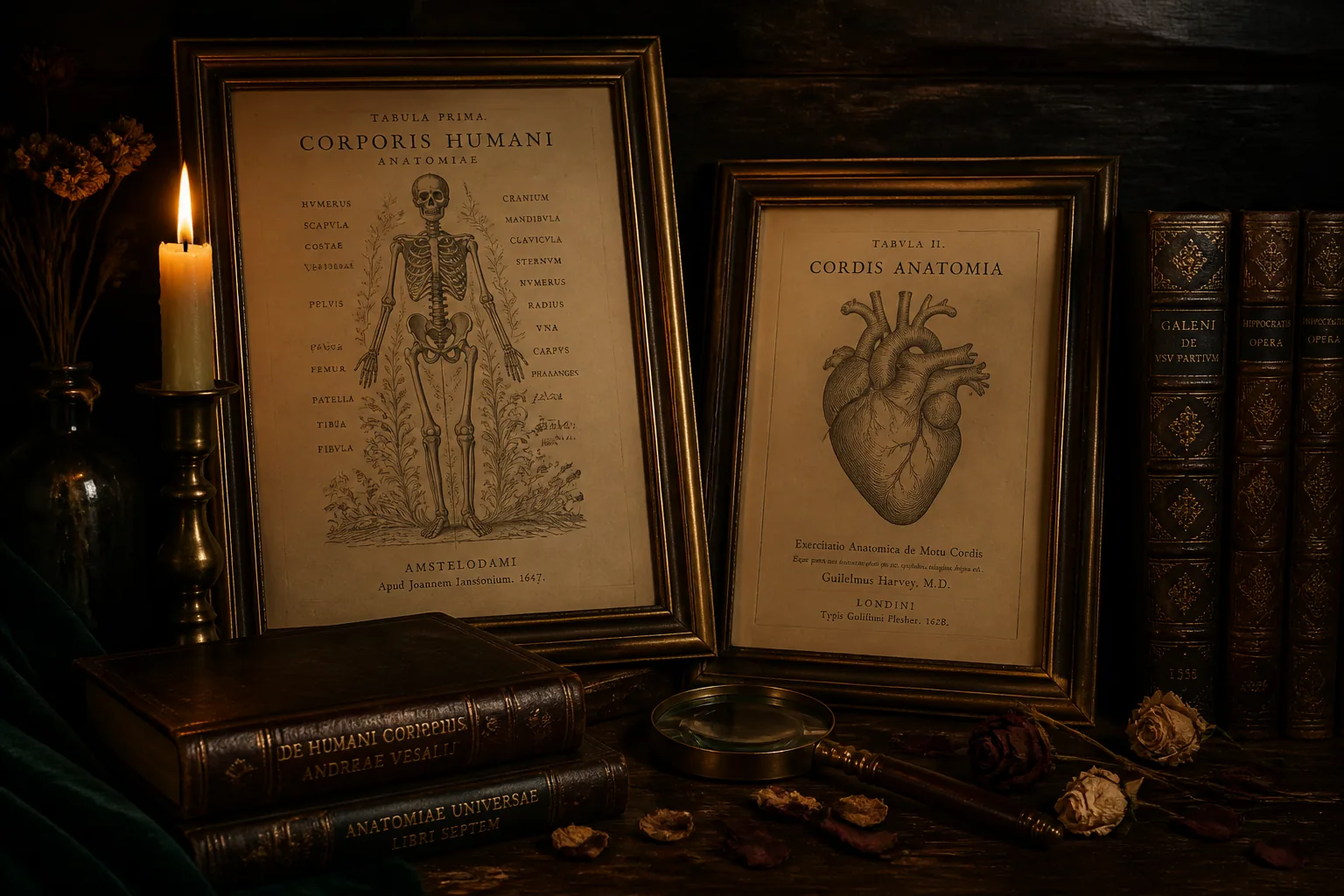
Dark academia crystallised as a named aesthetic around 2019–2020, but the underlying buyer desire (decor that looks intelligent, literary, and old) has been on Etsy for years under different terms: vintage academic art, scholarly decor, library prints, Victorian wall art. The aesthetic gave buyers a shared vocabulary and Etsy’s algorithm a keyword cluster to index. The result is a niche with real, sustained search volume and a buyer base that is genuinely loyal to the look.
The aesthetic didn’t collapse after its TikTok peak the way some trends do. That’s because it’s rooted in a genuine decorating style preference, not a passing cultural moment. The buyers who wanted their bedroom to look like a 19th-century scholar’s study in 2020 still want that in 2026, and they’re now buying for their first apartment, not their parents’ house.
The competition is real but not overwhelming. Compared to botanical or cottagecore, dark academia wall art has fewer quality listings and more opportunity for a distinctive new shop to gain traction quickly. The catch is that the aesthetic requires more effort to execute well than a simple floral print. Buyers notice immediately if a “dark academia” design has a modern feel, wrong colors, or anachronistic visual elements.
What Sells in the Dark Academia Niche
Antique maps and architectural plans. Celestial maps (the kind with constellations depicted as illustrated figures), old city plans (Rome, Athens, Paris, Constantinople), and vintage architectural elevations of cathedrals and libraries. These sell as both large format statement prints and small framed pieces in gallery wall arrangements. The more historically specific, the better: “1692 Celestial Atlas Map” outperforms “vintage astronomy map” as a listing concept.
Anatomical illustrations. Human anatomy in the style of Vesalius or Da Vinci: muscles, skeletal systems, brain cross-sections, eye diagrams. These are perennial sellers in the dark academia niche because they signal scientific scholarship and have the right visual language (detailed pen linework, aged paper, Latin labels). Botanical anatomical illustrations (cross-section diagrams of seeds, root structures) have lower competition and crossover into the botanical niche.
Classical sculpture studies. Drawings or engravings of Greek and Roman marble sculpture: busts, torsos, architectural fragments. The David, the Venus de Milo, the Discobolus. These work in both minimal pencil sketch style (single subject on aged paper) and denser composition styles (multiple fragments arranged as a collection plate). Buyers use these for bedroom and home office walls.
Vanitas and memento mori compositions. Skull studies, candlestick compositions, hourglass and pocket watch arrangements, moth and butterfly pinned specimens. These carry the mortality-as-philosophy undercurrent that runs through dark academia culture. Executed in a vintage scientific illustration style, they convert strongly. Done poorly (generic graphic design skull), they read as Halloween rather than scholarly.
Literary typography prints. Quotes from canonical dark academia texts (Donna Tartt’s The Secret History, Oscar Wilde, Edgar Allan Poe, John Keats) set in aged serif typography on parchment or dark backgrounds. These require careful copyright consideration: public domain authors (Keats, Poe, Wilde, Shakespeare) are safe. Contemporary authors are not. The most successful literary prints are the ones where the typography design itself is beautiful, not just the quote.
Library and book imagery. Illustrations of overflowing bookshelves, library reading rooms, open books with botanical or astronomical inlays. “Reading nook art,” “library print,” and “book lover wall art” are adjacent search terms that dark academia buyers also use.
Alchemical and esoteric diagrams. Vintage alchemy symbols, astrological diagrams, hermetic charts. These cross over with celestial and occult buyers and have a distinctive visual style that’s hard to confuse with anything else.
What Doesn’t Sell / Common Mistakes
Modern typography with a dark palette. A bold sans-serif quote on a dark background is not dark academia. It’s a motivational poster with a dark filter. The typography must feel period-appropriate: old-style serif, copperplate, engraver’s script, or monospaced typewriter type.
AI-generated images that look too clean. The dark academia aesthetic relies on visual texture: grain, age, imperfection. AI outputs with smooth, perfect gradients look digital and wrong for this niche. Post-processing to add paper texture, grain, and aged color treatment is necessary to make AI-generated art read as authentically dark academia.
Halloween framing. Skulls, ravens, candles, and gothic imagery can all belong in dark academia, but if they’re styled for Halloween (bright orange pumpkin, cartoon bone styling, October-seasonal framing), they’re a different product for a different buyer. Dark academia skull art is a year-round, serious decorating purchase. Frame it accordingly in your listing photos, title, and description.
Wrong palette: cool tones and blues. If your listing thumbnail has cool gray or any shade of blue as a dominant background, it’s not reading as dark academia to a buyer’s eye. Warm sepia, aged cream, forest green, burgundy, and charcoal are the correct palette. Test your thumbnails at small size to verify the warmth reads clearly.
Oversized single-subject prints without context. A dark academia buyer decorating a study is thinking in terms of a considered wall arrangement, not a single print. Gallery wall sets, matched pairs (twin skull studies, paired antique maps), and three-piece collections convert better than individual large prints for this buyer profile.
Technical Specs for Dark Academia Art
Dark academia prints skew toward medium and large format. The aesthetic is maximalist, layered, and meant to fill space. A 4×6 dark academia print is an unusual product.
Recommended sizes: 8×10, 11×14, 16×20, 18×24 for individual prints. A4 and A3 for European buyers. Large format (24×36) for map and architectural prints. Square formats have limited demand in this niche; dark academia is predominantly portrait orientation.
Resolution: 300 DPI at output size. Large format prints especially: a pixelated celestial map at 18×24 is a failed product. Check the 300 DPI guide before publishing.
Paper texture in the file: Dark academia buyers expect aged, textured backgrounds. This should be built into the design file, not left to the buyer to add in post. A flat white background under dark academia artwork reads wrong at print time.
Ratios: Primarily portrait vertical. Some antique maps work in landscape (4:3) or near-square. The wall art ratio guide covers how to set up artboards for non-standard ratios without distortion.
File format: High-quality JPEG for most prints. For designs with significant fine detail (anatomical labels, map text, typographic prints), test at 100% zoom before export to verify small text is sharp. PDF alongside JPEG for buyers who are print-shop ordering.
Etsy SEO for the Dark Academia Niche
Title pattern:
[Specific Subject] Printable Art | Dark Academia [Descriptor] Print | Vintage [Style] Digital Download | [Size reference]
Example: Antique Celestial Map Printable Art | Dark Academia Star Chart Print | Victorian Astronomy Digital Download | 8x10 16x20 A4
Tags that work: “dark academia wall art,” “vintage academic print,” “antique map printable,” “skull art print,” “Victorian illustration,” “gothic home decor,” “library art print,” “old money aesthetic art,” “scholarly decor.” Include subject-specific tags: “anatomical art print,” “celestial map print,” “vanitas art,” “memento mori print.”
The “old money” crossover: there is significant overlap between “dark academia” and “old money aesthetic” searches. Consider adding “old money decor” and “old money wall art” to tags and descriptions. The buyer cohort is similar and the visual aesthetic has real overlap.
Seasonal strategy: Back-to-school (July–September uploads for August–September sales) is the primary opportunity. Buyers searching “dorm room art,” “college decor,” and “academic aesthetic” spike in late summer. Having listings indexed before this peak requires uploading in June–July. The Etsy SEO guide covers how to estimate indexing timelines for new listings.
Creating Dark Academia Art
The aesthetic requires style discipline. A dark academia print has to feel old, dense, and scholarly, not just dark-colored. For sellers creating this art, whether by hand or with AI tools, the specific visual elements that signal the aesthetic are:
- Aged paper or very dark backgrounds (not flat white, not cool gray)
- Pen and ink or engraving-style linework with visible texture
- Latin or period-appropriate text, labels, and annotations
- Objects from a specific historical vocabulary (scientific instruments, classical sculpture, botanical specimens, alchemical symbols)
- Warm sepia-brown color palette, or high-contrast dark with warm golden details
AI generation for this niche works well when the prompt specifies these elements precisely. Generic prompts produce generic outputs. A prompt built around “Victorian anatomical illustration, copperplate engraving style, sepia and cream palette, aged parchment texture, Latin marginalia” produces something that looks like a genuine product.
Elistit’s generator handles the print preparation side (300 DPI output, multiple ratio variants, ready to upload), which removes the technical production burden and lets you focus on style and subject selection. For a seller building a 15-listing dark academia shop (maps, anatomical studies, vanitas, literary prints), this means a week of output rather than a month.
Building a Dark Academia Shop That Works
The most successful dark academia shops on Etsy have a consistent, identifiable aesthetic that reads from the thumbnail grid. A buyer who lands on your shop page and sees a coherent visual world (same tones, same level of detail, same period feel) converts at a higher rate than a buyer who sees a mixed grid of loosely “dark” art.
Build in categories that cover the buyer’s wall needs: a statement large-format map print, a set of 3–4 scholarly studies for a gallery wall, a pair of matching smaller prints for nightstands or bookshelves. Price accordingly: large format at $8–$12, gallery wall set of 4 at $16–$22, individual smaller prints at $4–$6.
Cross-sell within your shop by linking related listings in descriptions. A buyer who purchases the celestial map print is likely to consider the anatomical skull study. Build the connection explicitly.
The dark academia buyer has high aesthetic standards and is buying for a considered decorating purpose. They’ll leave reviews that mention how the print looks on their wall, which drives future conversions. Getting the first 10 reviews right (quality prints, good packaging instructions, accurate colors) is worth more than any SEO tactic in the first 90 days.
Related aesthetics
- Maximalist Wall Art: the other rich, layered look for considered decorators.
- Vintage Map Wall Art: antique maps slot straight into a dark academia gallery wall.
Quick questions
Quickly answered.
Q.01What subjects sell best for dark academia wall art on Etsy?
Antique maps (celestial, anatomical, architectural), classical anatomy illustrations, Greek and Roman sculpture studies, library and bookshelf imagery, skull and vanitas compositions, vintage literary typography quotes, botanical illustrations in Victorian scientific style, and manuscript-style calligraphy. The unifying thread is objects that look like they belong in a 19th-century scholar's study. Specific sellable subjects: 'human skull study,' 'Da Vinci anatomical drawings inspired,' 'ancient Rome map,' 'Victorian butterfly collection,' 'memento mori composition.'
Q.02What are the palette rules for dark academia art?
The core palette is warm shadow tones: brown, ochre, aged cream, sepia, forest green, burgundy, and charcoal. Key rule: avoid cool grays and blues, which read as modern or Scandinavian, not dark academia. Backgrounds should be aged paper, sepia parchment, or very dark (near-black) for high-contrast dramatic pieces. Gold and brass accents work well. The palette should look like it could be a photograph of something old, not a digital creation. Desaturated warm tones are almost always the right move; anything bright is wrong for this niche.
Q.03Who are the dark academia buyers on Etsy?
Two distinct buyer profiles. First: students and young adults (18–28) who identify with the dark academia lifestyle aesthetic, decorating dorm rooms, first apartments, and home offices to look 'scholarly.' They're price-sensitive and buy singles ($4–$8). Second: established adults (30–50) who want vintage-intellectual decor for their home office, study, or library room. They buy larger format prints or sets and are less price-sensitive ($15–$30). The second buyer converts less often but at higher value. Your listing photos should show both a styled bedroom context and a home office context to capture both.
Q.04Does dark academia have seasonal peaks on Etsy?
Yes. The academic calendar drives real demand spikes. Late August through September (back to school, dorm decorating) is the strongest annual peak. January (new semester, new room setup) has a secondary spike. The aesthetic also performs well in October and November, when the autumn-and-decay visual language aligns with the season. Summer (June–July) is weaker. Sellers targeting dorm room buyers should have listings indexed by early August at the latest, so upload in June to allow time for indexing.
Q.05What other aesthetics pair well with dark academia for cross-selling?
Gothic and Victorian aesthetics share buyers: dark florals, candles, ravens, and stained-glass art cross-sell into dark academia shops. Celestial and occult art (moon phases, tarot card inspired art, alchemical symbols) is a natural companion because the dark academia buyer is often interested in esoteric knowledge and antiquity. Cottagecore crossover is limited, since the palettes conflict. Maximalist vintage, eclectic Victorian, and 'old money' aesthetics are closer neighbors than any modern or minimalist style.
Keep going.
Botanical Wall Art for Etsy: What Sells, What's Oversaturated, and How to Stand Out
Botanical is one of Etsy's most competitive niches. How to find the undersaturated sub-niches and create botanical prints that actually rank.
Boho Wall Art for Etsy: Designs That Sell in 2026
Complete guide to creating profitable boho wall art for Etsy. Design principles, trending aesthetics, pricing strategy, and how to batch-create variations.
Celestial Wall Art for Etsy: Designs, Trends, and What Sells in 2026
Moon phases, star maps, zodiac prints: what celestial buyers want on Etsy and how to create high-converting celestial wall art listings.
Classroom Clipart for Etsy: The Niche, What Teachers Buy, and How to Create Bundles That Sell
Classroom clipart is one of Etsy's steadiest niches. What teachers search for, how to price and structure bundles, and what makes a set convert.