One Etsy Shop or Multiple? How to Decide as You Scale Digital Products
One Etsy shop or several? Multiple shops usually multiply work without multiplying revenue. When one shop wins and when a second is justified.
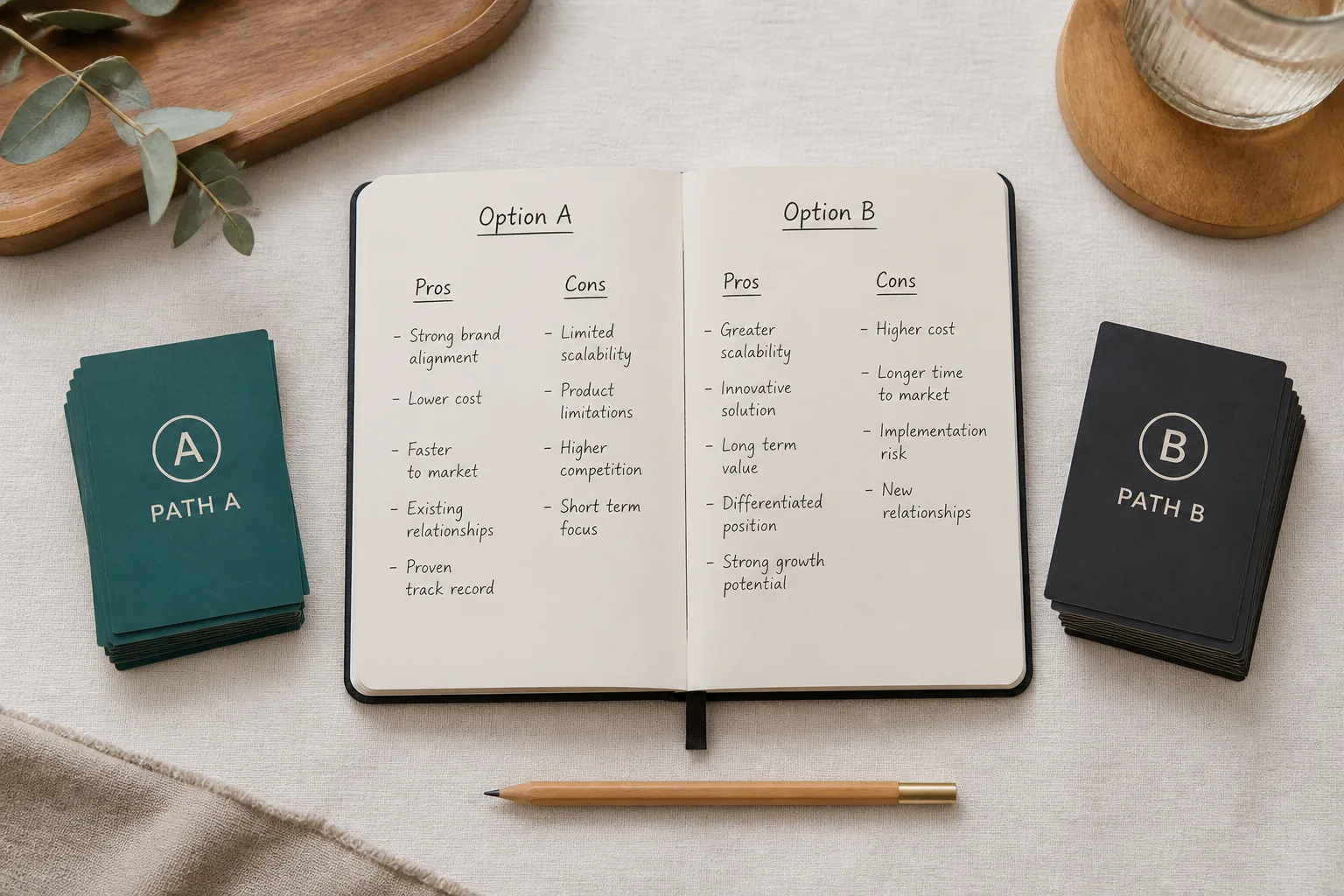
“Should I open a second Etsy shop?” is one of the most common questions ambitious sellers ask, and it’s usually asked at exactly the wrong moment: right when the first shop starts working and the instinct to diversify kicks in. The appeal is obvious: spread risk, target a new niche, build a second income stream. The reality is that a second shop almost always multiplies your work long before it multiplies your revenue, and often it never does the second part at all.
That doesn’t make multiple shops always wrong. It makes them a specific tool for a specific situation, one most sellers asking the question don’t actually have.
The Default Answer: One Focused Shop
Start from the default and only deviate with a strong reason: one focused shop almost always beats two diluted ones.
The reason is concentration. Everything that makes an Etsy shop successful (algorithmic trust, review history, SEO authority, repeat-buyer relationships, your own attention) is a resource that compounds when concentrated and weakens when split. Two shops means two of everything at half the strength: half the reviews, half the search authority, half your focus, divided across two climbs up the same hill.
A seller with one 300-listing shop has a single coherent entity that Etsy understands, trusts, and ranks. A seller with two 150-listing shops has two half-built entities, each less established than the combined one would have been, each demanding its own full set of overhead. The split rarely pays for itself.
So the burden of proof sits on the second shop. Unless you can name a concrete reason a new line cannot live inside your existing shop, it belongs in your existing shop.
Why Etsy’s Algorithm Rewards Focus
The case for one shop isn’t just about your attention; it’s baked into how Etsy ranks. A shop teaches the algorithm what it sells through the consistency of its listings, tags, categories, and the searches it converts on. A tightly focused shop sends an unmistakable signal: this shop is about minimalist wall art, show it to people searching for minimalist wall art. That clarity earns better placement across the whole catalog.
A shop sprawling across unrelated niches sends noise. When the same shop sells wall art, wedding stationery, and woodworking SVGs, the algorithm struggles to characterize it, and that ambiguity can suppress everything in it. Coherence is a ranking asset.
This cuts both ways and is the crux of the whole decision. If your new product line is related to your existing niche, putting it in your current shop strengthens the coherent signal (it’s more of what the shop already is). If the new line is unrelated, adding it to your current shop actively pollutes that signal. So the algorithm itself tells you the rule: related lines belong together in one shop; genuinely unrelated lines may justify their own.
When a Second Shop Is Genuinely Justified
There are real cases for a second shop. They’re narrower than people assume, and they share one trait: the two lines would actively harm each other if combined.
Truly unrelated niches. Not “wall art and posters,” which are neighbors and belong together. Unrelated means no buyer overlap and no shared search language: gothic home décor and baby shower printables, say. Forcing those into one shop confuses both the algorithm and the buyers.
Different brand identity. Sometimes the brand, not just the niche, has to differ. A minimalist, muted, design-forward art brand and a loud, playful, novelty-gift brand can’t share a shop banner, voice, and aesthetic without one undermining the other. When the brand promises genuinely conflict, a separate shop protects both.
Different buyer language. When two lines attract buyers who search, browse, and evaluate completely differently (a professional buying commercial-use design assets versus a hobbyist buying cute craft clipart), the listing copy, pricing cues, and policies that serve one can repel the other. Distinct audiences with distinct languages can warrant distinct shops.
Notice the pattern: in every justified case, combining the lines would damage one or both. If combining them is merely untidy rather than damaging, keep one shop.
The Hidden Costs of a Second Shop
The reason sellers underestimate this decision is that the costs of a second shop are mostly invisible until you’re living them.
Separate SEO history. Your established shop’s search authority took months of listings, sales, and reviews to build. A new shop starts at zero and re-climbs that entire curve from scratch. As covered in our guide on how many listings you should have, the early flat stretch where nothing sells is the hardest part, and a second shop means doing it all over again.
Separate reviews. Reviews are among the strongest trust and conversion signals on Etsy, and they don’t transfer. A new shop has none, so it converts worse on identical traffic until it slowly rebuilds social proof from nothing.
Double the admin. Two shops means two of everything to maintain: listings, policies, sections, customer messages, analytics dashboards, and per-shop fees and settings. This load is constant and grows with each shop. The hours you’d spend keeping a second shop alive are hours not spent deepening the shop that already works.
The asymmetry is the whole point: the costs land immediately and in full, while the benefits, if they ever arrive, arrive slowly. You pay up front and hope to earn it back later.
Brand vs Niche: The Real Framing
The cleanest way to decide is to reframe the question. It isn’t “one shop or two?” It’s “is this one brand or two?”
A niche is a topic: celestial art, botanical prints, classroom clipart. Multiple related niches can comfortably live under one brand and one shop, as categories or sections. Expanding from celestial to mystical to botanical line art is one brand widening its range, not a reason to split.
A brand is a promise: a voice, an aesthetic, a customer relationship. You only need a second shop when you genuinely need a second brand: a different promise to a different person that can’t coexist with the first. That’s a far higher bar than “I want to sell a new kind of thing,” and most expansion ideas don’t clear it. Most of the time, what feels like “I need a second shop” is just “I want a new category,” and a category lives happily inside your existing shop.
How Elistit’s One-Shop-Per-Workspace Model Fits
Elistit is built around this exact principle: one Etsy shop per workspace. Each workspace connects to a single shop, and everything in it (the brand voice, the listing copy, the settings) stays tuned to that one shop’s niche. Nothing bleeds across shops, which is precisely what keeps each shop’s signal focused and coherent in Etsy’s eyes.
This maps cleanly onto the decision above. If you’re consolidating into one focused shop (the right move for most sellers), you run one workspace and let it stay deeply specialized. If you genuinely run multiple distinct brands that clear the bar from the previous section, you create a separate workspace per shop so each shop keeps its own focused brand voice and listing strategy, while you still manage everything from a single account.
The model is opinionated on purpose: it makes focus the default and treats the second shop as the deliberate exception it should be. For the operational details, see one shop per workspace. And if you’re a freelancer or agency managing several clients’ shops, the Etsy freelancers and agencies playbook covers running many focused workspaces without losing your mind to the admin.
Before you open a second shop, run the test: is this a second brand that would harm your first if combined, or just a second category that would strengthen it? Almost always, it’s the category. And almost always, one focused shop wins.
Quick questions
Quickly answered.
Q.01Is it better to have one Etsy shop or multiple?
For most sellers, one focused shop beats multiple diluted ones. A single shop concentrates your algorithmic trust, review history, and SEO authority in one place, and Etsy rewards focused shops that clearly signal what they sell. Multiple shops split all of that and double your admin, so a second shop is only worth it when the niches are genuinely unrelated.
Q.02When should I open a second Etsy shop?
Open a second shop only when the new line is genuinely unrelated to your first: different buyers, different search language, and a brand identity that would confuse customers if mixed. Wedding invitations and gothic wall art are a fair example. If the new products share buyer overlap with your existing niche, they belong in your current shop as a new category, not a separate shop.
Q.03Does Etsy's algorithm reward focused shops?
Yes. A coherent shop sends Etsy a clear signal about what it sells and who to show it to, which improves placement across the whole catalog. A shop scattered across unrelated niches sends mixed signals and is harder for the algorithm to place. Focus compounds; scatter dilutes.
Q.04What are the hidden costs of running multiple Etsy shops?
Each shop starts its SEO history, review count, and algorithmic trust from zero, so a second shop is a fresh climb up the same curve you already conquered. You also double the operational load: separate listings, policies, messages, analytics, and fees per shop. The work multiplies immediately while the revenue, at best, arrives slowly.
Q.05How does Elistit handle sellers with more than one Etsy shop?
Elistit uses one Etsy shop per workspace. Each workspace connects to a single shop, so its brand voice, listing copy, and settings stay tuned to that shop's niche and never bleed across shops. If you genuinely run multiple shops, you create a separate workspace per shop, keeping each one focused while managing them all from one account.
Keep going.
Etsy Batch Upload Strategy: How to List Products Faster Without Sacrificing SEO
An Etsy batch upload strategy that beats one-at-a-time listing: how to batch production and uploads while keeping every listing properly optimized.
How to Create and Sell Clipart Bundles on Etsy
How to create cohesive, profitable Etsy clipart bundles: sizing, themes, file organization, pricing, and the workflow that keeps sets consistent.
How Many Listings Should You Have on Etsy? The Math Behind Shop Size
There's a real relationship between listing count and sales on Etsy, but it's not linear. How many listings you actually need at each stage, and why.
How to Create Clipart Bundles with AI
Describe a theme, generate 10 to 25 cohesive images, and get a complete Etsy clipart bundle with a draft listing to review.